Sleep Apnea TreatmentIn Leland & Wilmington
At Omni Dental, Dr. Michael J. Kuzma provides personalized sleep apnea treatment in Wilmington, NC using custom oral appliances that are comfortable, compact, and easy to incorporate into your nightly routine. He has been helping patients manage sleep apnea for more than 15 years and understands firsthand what wearing an oral appliance is like because he and several members of our team use them themselves.
Why does sleep apnea treatment matter?
Obstructive sleep apnea occurs when the airway repeatedly becomes narrowed or blocked during sleep, interrupting normal breathing and preventing your body from getting the consistent, restorative rest it needs.
For some people, the first clue is loud snoring. Others notice daytime exhaustion, morning headaches, difficulty concentrating, or a partner who has witnessed pauses in their breathing overnight.
Beyond leaving you tired, untreated sleep apnea has been associated with a number of serious health concerns, including:
- High blood pressure
- Heart disease and other cardiovascular concerns
- Stroke
- Type 2 diabetes
- Difficulty concentrating or remembering
- Daytime fatigue
- Mood changes
- Increased risk of driving or workplace accidents
The good news is that sleep apnea is treatable. Once you have been properly diagnosed, the goal is to find a treatment you can use consistently and comfortably.
Did you know…
What if I cannot tolerate CPAP?
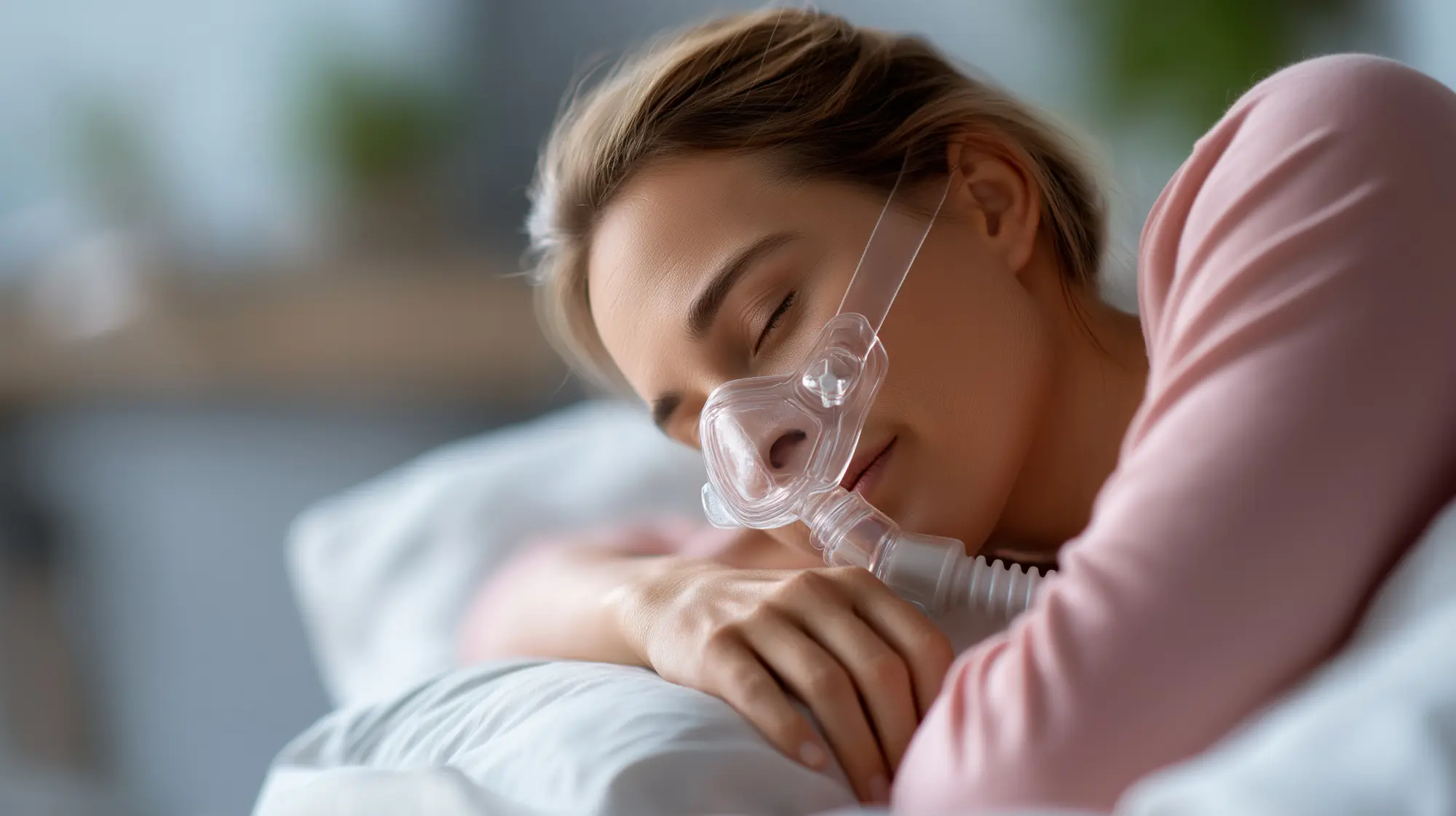
CPAP, or continuous positive airway pressure, is highly effective for treating obstructive sleep apnea. It uses a mask and gentle air pressure to help prevent the airway from closing while you sleep.
For many people, it works very well. For others, consistently wearing the equipment can be difficult.
Some common CPAP frustrations include:
- An uncomfortable or poorly fitting mask
- Dryness of the mouth, nose, or throat
- Skin irritation
- Difficulty sleeping with the mask in place
- Feeling claustrophobic
- Noise from the equipment
- Hoses interfering with movement during sleep
- Difficulty traveling with or setting up the machine
If you have been prescribed CPAP, it is important to work with your sleep provider to troubleshoot these concerns before giving up on treatment. But if you still cannot comfortably or consistently use your CPAP, that does not mean you should leave your sleep apnea untreated.
For appropriate patients, custom oral appliance therapy may provide another option.
What is oral appliance therapy?
Oral appliance therapy uses a small, custom-made device that fits over your teeth while you sleep. The appliance gently positions your lower jaw in a way that helps create more space in the airway and reduces the likelihood of it becoming obstructed overnight.
There is no mask, tubing, or air pump. You simply place the appliance in your mouth before going to sleep and remove it when you wake up.
Because each appliance is made specifically for your teeth, bite, and treatment needs, it offers a very different experience from an over-the-counter snoring mouthpiece.
For adults with diagnosed obstructive sleep apnea who cannot tolerate CPAP or would prefer an alternative treatment, a custom oral appliance may be worth exploring.
The benefits of oral appliance therapy
Comfortable and customized
Your appliance is created specifically for your mouth and adjusted over time to balance airway support with comfort.
Easy to travel with
An oral appliance fits into a small case, making it convenient for vacations, business trips, camping, and nights away from home.
Quiet and simple
There is no machine to plug in, no mask to adjust, and no equipment making noise beside the bed.
The sleep apnea treatment process
Start with your diagnosis

Start with your diagnosis
Sleep apnea treatment begins with understanding exactly what is happening while you sleep. If you have already completed a sleep study and received a diagnosis of obstructive sleep apnea, bring that information with you.
Meet with Dr. Kuzma

Meet with Dr. Kuzma
During your consultation, Dr. Kuzma will review your diagnosis, sleep history, previous treatment, and experience with CPAP if you have used it.
He will also examine your teeth, gums, jaw, and bite to make sure an oral appliance can be worn safely and comfortably.
Design your custom appliance
Design your custom appliance
If oral appliance therapy is appropriate, we will gather detailed information about your teeth and bite so your device can be fabricated specifically for you.
Unlike a generic mouthguard, a custom sleep appliance is designed to fit precisely and allow controlled adjustments to the position of your jaw.
Fine-tune your treatment

Fine-tune your treatment
Once your appliance is ready, you will return to Omni Dental so we can check the fit and show you how to wear and care for it.
Your appliance may be gradually adjusted based on your comfort, symptoms, and treatment needs. These refinements help us find a position that supports your airway without unnecessarily straining your teeth or jaw.
Make sure treatment is working

Make sure treatment is working
Feeling better is important, but symptom improvement alone does not tell us everything about what is happening while you sleep.
Follow-up with your sleep provider and, when recommended, repeat sleep testing can help confirm that your oral appliance is effectively managing your sleep apnea. We will continue to monitor the fit of your appliance, your bite, and your oral health during long-term use.
FAQ's
Frequently Asked Questions
Check out these frequently asked questions, or call us to speak with our team.